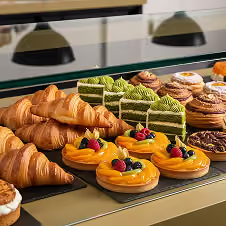
Why Butter Temperature Changes Everything
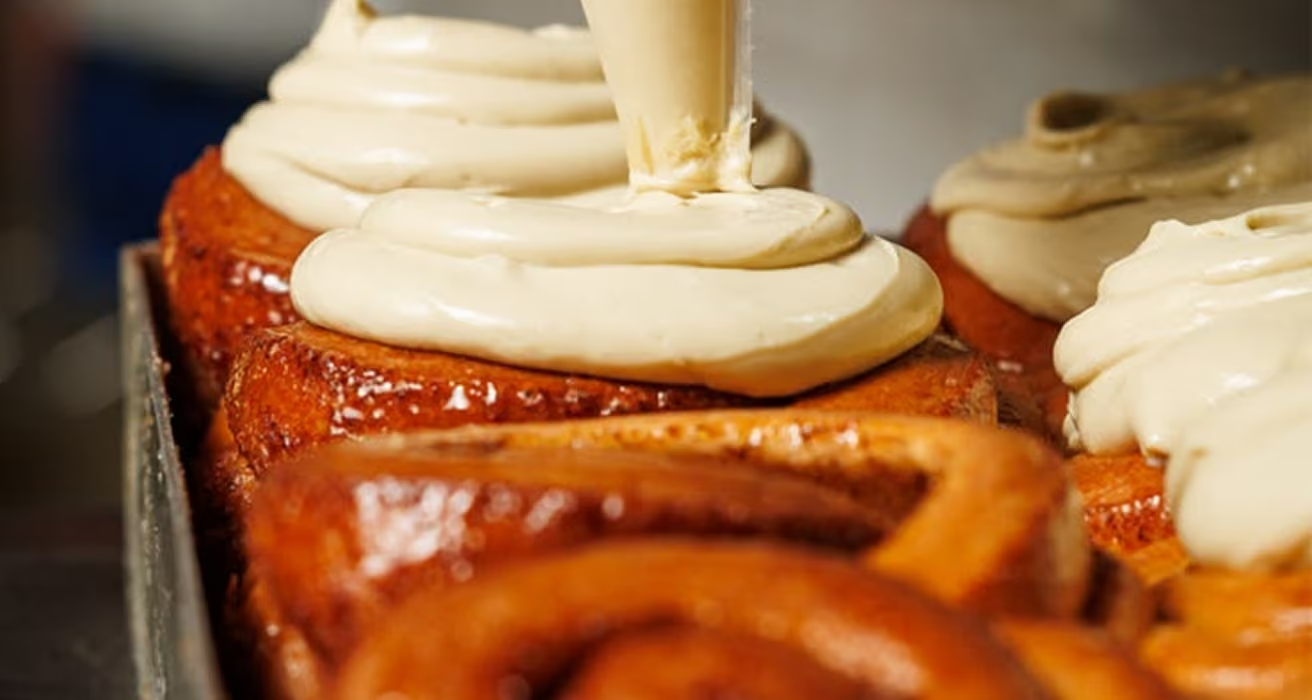
The Quiet Ingredient In Every Layer
Cold Butter Makes Flakes
Laminated dough depends on thin sheets of butter that stay solid while the dough is rolled. When those sheets hit the oven, their water turns to steam and lifts the layers apart into flakes.
Soft Butter Makes Tender Crumbs
Cakes and cookies want butter that is soft enough to beat with sugar. The air trapped in that creaming step is what gives a pound cake its fine, even and tender crumb.
What Happens When It Goes Wrong
If the butter warms during lamination, it melts into the dough instead of staying in sheets. The croissant still bakes, but it comes out bready and heavy rather than open and honeycombed.
If it is too cold for a cake batter, it breaks into lumps that never fully combine. The batter looks curdled, bakes unevenly and loses the lightness that creaming should bring.
How We Keep It Right
We Measure, Not Guess
Our pastry kitchen checks the butter with a thermometer before every fold. Around thirteen degrees is our sweet spot for lamination: firm, but still flexible enough to bend.
We Rest Between Folds
Every few folds the dough goes back into the cold to rest. It costs us time, but it keeps each layer distinct, and that is the difference you can taste in every bite.